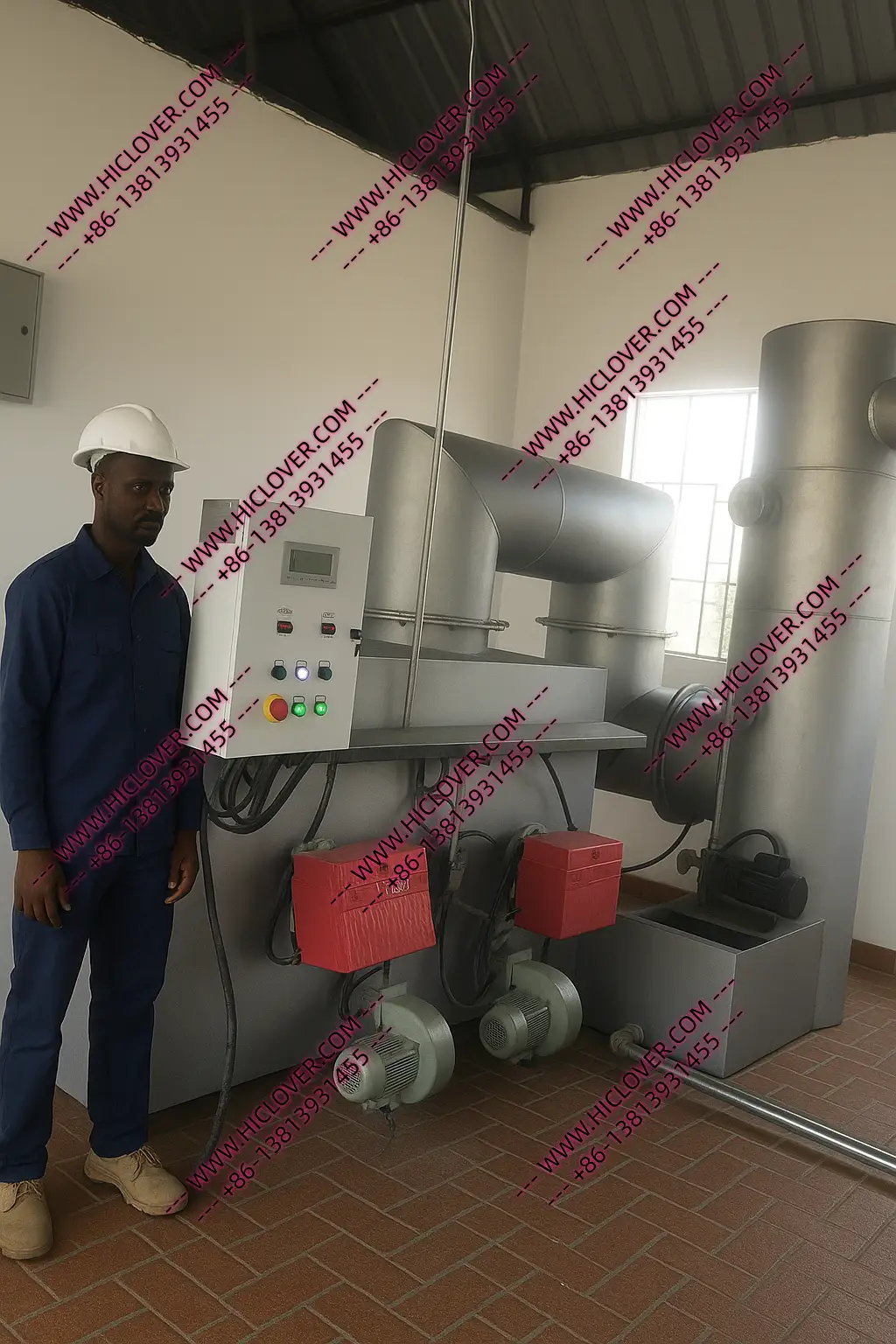
HICLOVER Waste Incinerators: Engineered for Diverse Global Applications and Stringent Compliance
Modern waste incinerators represent a critical node in the infrastructure of public health and environmental protection, particularly for the safe destruction of pathological and hazardous materials. Operating at core temperatures exceeding 850°C in the primary chamber and maintaining a secondary chamber temperature of over 1100°C, these systems ensure the complete thermal decomposition of complex waste streams. Engineering reliability in this sector is defined by adherence to international frameworks from the World Health Organization (WHO) and European Union emissions directives, which mandate such high-temperature regimes for complete combustion and pollutant control.
Technical Principles and Regulatory Compliance in Incineration
The fundamental efficacy of a medical or hazardous waste incinerator is governed by the “3T” principle: Time, Temperature, and Turbulence. A dual-chamber design is non-negotiable for regulated waste. Combustion initiates in a primary chamber under controlled, oxygen-starved conditions, volatilizing the waste. The resulting gases are then subjected to intense, high-temperature oxidation in a secondary chamber with sufficient residence time—typically two seconds—to break down complex hydrocarbons and potential pathogens. This process, essential for units ranging from a medical waste incinerator syc-3 model to larger systems, renders waste inert and significantly reduces its volume.
Emission control is a parallel critical system. Post-combustion gases are treated through either dry scrubbing, using reagents like lime and activated carbon, or wet scrubbing systems that neutralize acidic components. The selection between these technologies often depends on local environmental regulations, available utilities, and the specific waste composition. For definitive technical guidance on these standards, engineers frequently reference resources such as secondary chamber residence time incinerator standard. Manufacturers like HICLOVER design systems with integrated emission control to meet a global spectrum of requirements, a necessity for projects from Mali medical waste incinerators china suppliers to installations in highly regulated markets.
Configurational Comparison: Fixed, Mobile, and Modular Systems
The operational landscape for thermal waste treatment varies drastically, necessitating a range of physical configurations. Fixed-site incinerators are traditional, high-capacity solutions often integrated into hospital complexes or large waste processing facilities. In contrast, the rise of decentralized waste management strategies and the need for rapid deployment in crisis zones have driven demand for mobile and modular solutions.
A Containerized Incinerator, such as those developed for contexts like Comoros Containerized Incinerator needs, exemplifies this trend. These are fully integrated systems built within standard shipping containers, allowing for plug-and-play operation after simple site preparation. This design is invaluable for remote mining camps, humanitarian aid bases, or temporary field hospitals where permanent infrastructure is absent. Similarly, Angola mobile waste to energy china projects highlight a growing interest in systems that not only destroy waste but also recover thermal energy for auxiliary purposes, aligning with broader ESG (Environmental, Social, and Governance) compliance goals and carbon emission reduction pressures.
Control System Evolution: From Manual to Automated PLC Operation
The operational interface of modern incinerators has evolved significantly. While manual control panels exist for basic models, programmable logic controller (PLC) automation is now standard for consistent, safe, and efficient operation. A PLC system continuously monitors key parameters—chamber temperatures, draft pressure, and burner status—automatically adjusting feed rates and combustion air to maintain optimal conditions. This digital automation minimizes operator error, provides precise data logging for regulatory audits, and allows for remote monitoring, a feature that enhances supply chain resilience by enabling technical support across distances. This is particularly relevant for equipment destined for challenging environments like South Sudan incineration facilities.
Application-Specific Engineering for Global Markets
The core thermal process may be constant, but waste composition dictates specific engineering adaptations. A dedicated medical waste incinerator for sharps, cultures, and pharmaceutical waste requires robust feeding mechanisms and assured high-temperature performance. Specialized animal cremation burners are engineered for efficient loading and ash management for veterinary clinics, farms, or disease control programs. Furthermore, law enforcement and agricultural sectors require secure destruction units, sometimes referred to as a marijuana incinerator, designed for controlled substances or contaminated crops, emphasizing security features and audit trails alongside thermal efficiency.
This application-specific focus is evident in the solutions tailored for different regions. A Burundi medical incinerator china supply chain must account for local fuel availability, often necessitating multi-fuel capabilities (diesel, LPG, natural gas). For smaller clinics or remote posts, an Angola small scale medical incinerator with a capacity of 50-100 kg/hour provides a critical service without the footprint of a large plant. Factory-direct manufacturers like HICLOVER possess the engineering experience to customize chamber volume, refractory lining, and scrubber type to these precise conditions, offering a significant advantage over generic trading companies that lack in-house design and manufacturing capability. Detailed specifications for such adaptable systems can be reviewed through the company’s technical portal at www.hiclover.com/.
Strategic Advantages of Direct Manufacturing and Global Supply
Procuring industrial incineration equipment involves significant capital investment and long-term operational dependency. Engaging a factory-direct manufacturer establishes a direct line to engineering expertise and ensures stable supply chain management for spare parts and technical support. HICLOVER, as a manufacturer, controls the entire production process from steel fabrication and refractory installation to PLC programming and final testing. This vertical integration guarantees quality consistency, allows for genuine customization beyond catalogue specifications, and provides cost efficiency by eliminating intermediary margins.
The global export capability of established Chinese manufacturers is built on this foundation. It enables the provision of turnkey solutions that include delivery, installation supervision, operator training, and after-sales service worldwide. This model supports global infectious disease preparedness by ensuring reliable waste treatment technology can be deployed rapidly, even in developing healthcare systems or in response to emerging crises. The robustness of a factory-produced, china incinerator system, backed by decades of collective engineering experience, makes it a viable long-term asset for hospital incinerators and industrial clients alike, ensuring safe and compliant waste management wherever it is installed.
